Blog

  • Your Event Is Running on 7 Different Tools — And It’s Showing

    Your Event Is Running on 7 Different Tools — And It’s Showing

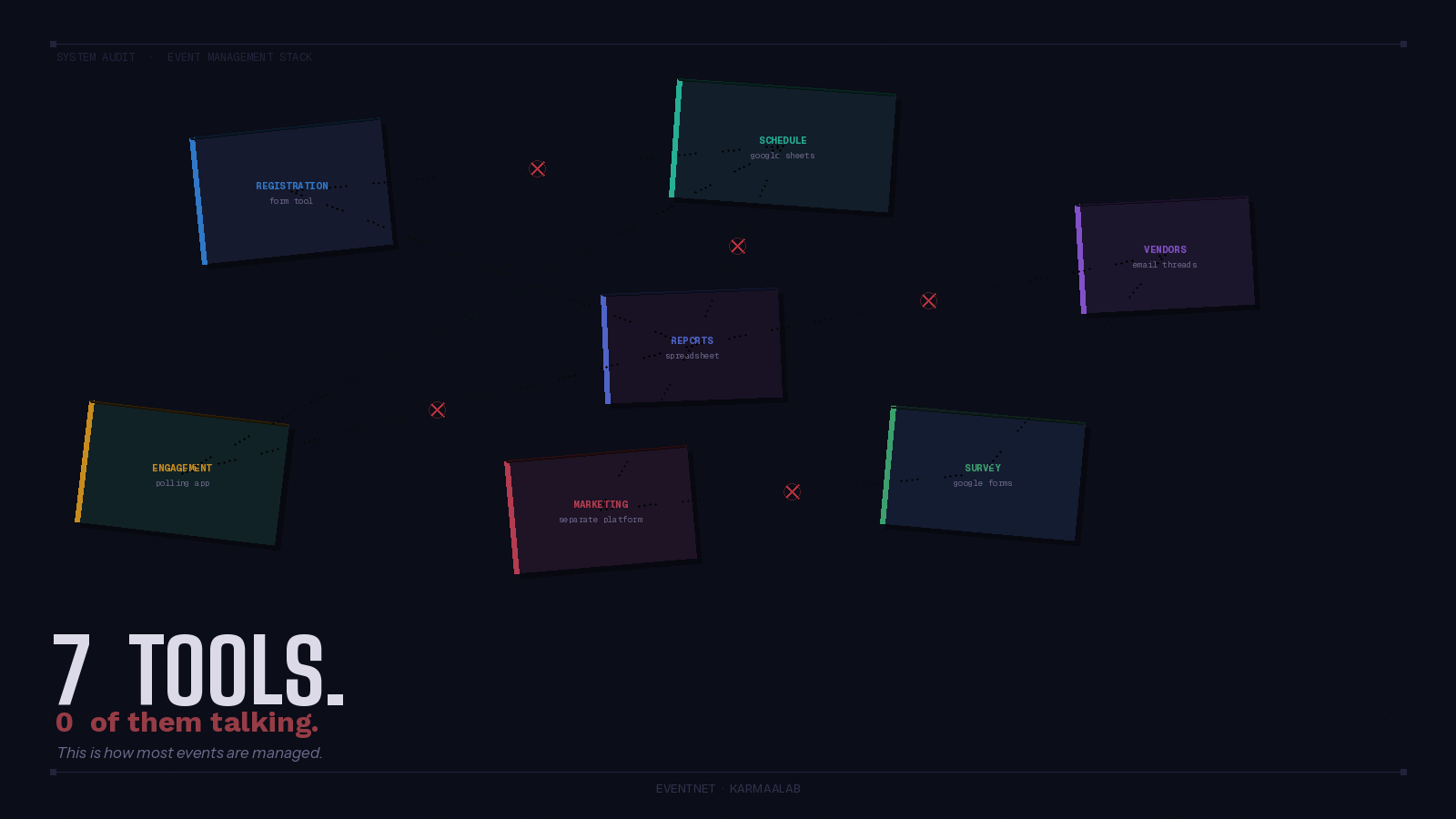
    What Fragmentation Actually Costs You

    The obvious cost is time. Switching between tools, re-entering data that should flow automatically, and chasing updates across platforms can consume hours that should be going into the quality of the event itself.

    But the less obvious cost is accuracy and trust.

    When your registration data lives in one platform and your schedule lives in another, they inevitably fall out of sync. Attendees show up for sessions that have moved. Speakers get incorrect briefing documents. Sponsors don’t receive their promised visibility because someone forgot to update a spreadsheet.

    These aren’t catastrophic failures individually. But they accumulate. And what attendees and sponsors experience is an event that feels slightly disorganised — even when the content is excellent.

    In a competitive events landscape, “slightly disorganised” is enough for people to choose someone else’s event next year.


    The Hybrid Problem Makes It Worse

    Until recently, this fragmentation was manageable — stressful, but manageable. Then hybrid events became the expectation.

    Now you’re not just managing one event. You’re managing two simultaneous experiences: the in-room audience and the virtual audience. And they need to feel equally well-managed, equally engaged, and equally informed.
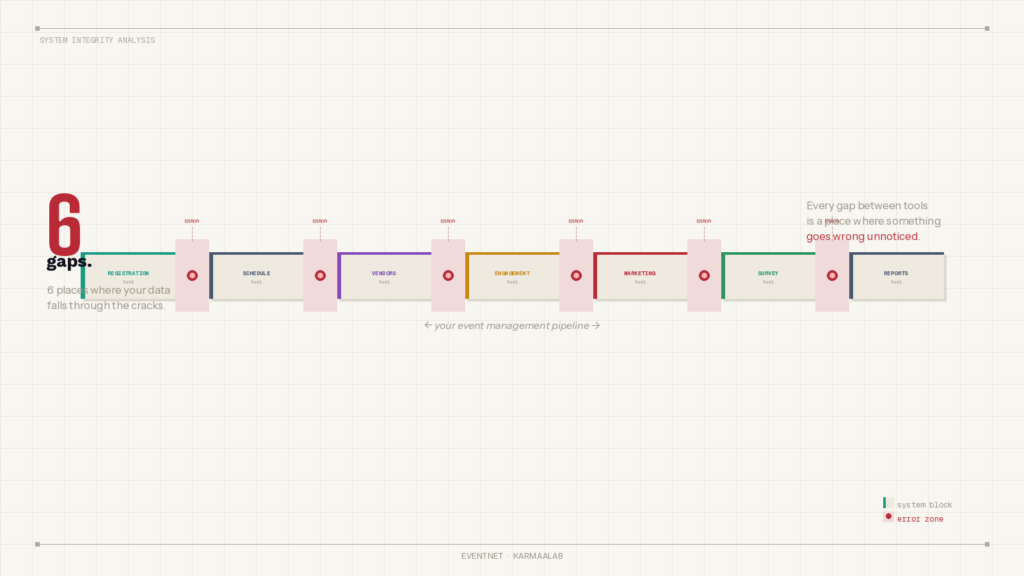
    Running hybrid events on a stack of disconnected tools is, frankly, very hard. Something always falls through the gap between in-person logistics and virtual production. Usually it’s the virtual attendees who get a second-rate experience — and they notice.


    What a Unified Platform Changes

    The shift from a fragmented tool stack to a single event management platform doesn’t just save time — it changes the quality of what’s possible.

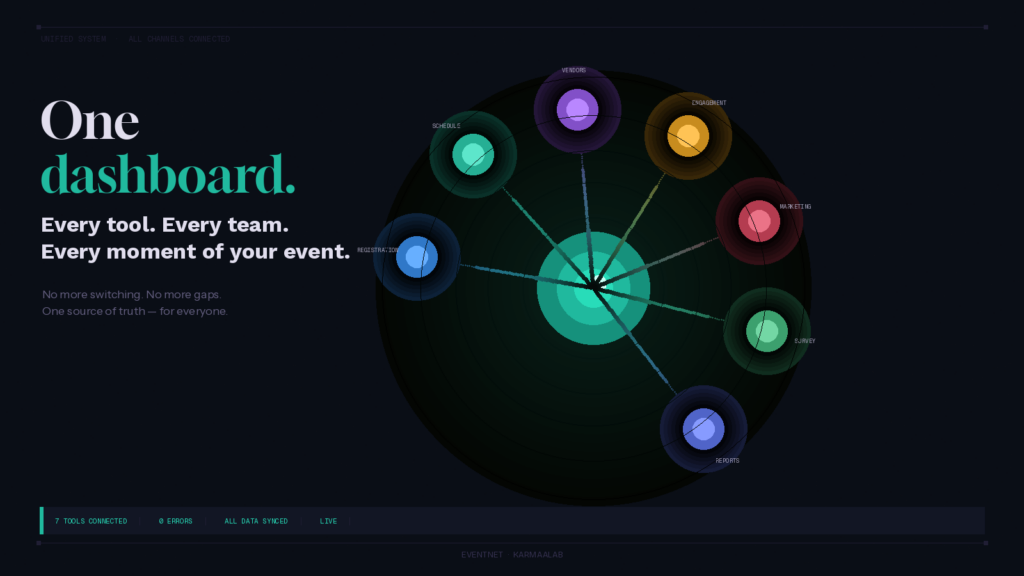
    When registration, scheduling, engagement, marketing, analytics, vendor management, and post-event follow-up all live in one place:

    Your team coordinates around one source of truth. No more “wait, which version of the schedule is current?” No more chasing updates from three different platforms.

    Your attendees get a consistent experience. From the moment they register to the post-event follow-up email, every touchpoint is connected. The experience feels intentional, not patchworked.

    Your data becomes useful. When engagement data, registration data, and post-event feedback all live in the same system, you can actually understand how your event performed — and make the next one better.

    Your virtual and in-person audiences are treated equally. Same platform, same engagement tools, same experience quality regardless of how people attend.


    The Events That Stand Out Are Running Leaner

    The best-organised events in India right now aren’t running on the largest teams or the biggest budgets. They’re running on better infrastructure.

    EventNet by Karmaalab is built for exactly this: a single platform that covers the entire event lifecycle — planning, registration, attendee engagement, networking, marketing, analytics, sponsorship management, and post-event follow-up.

    One login. One dashboard. One place where your whole team — and your sponsors and vendors — can see exactly what’s happening and what needs to happen next.
    For teams running virtual and hybrid events, EventNet handles both formats from the same interface — so your virtual attendees get the same quality of experience as the people in the room.


    The Question Worth Asking

    Before your next event, spend five minutes listing every tool you’ll use to plan and execute it. Count them.

    If the number is four or more, you’re carrying more coordination overhead than you need to — and you’re introducing more points of failure than any event can comfortably absorb.

    The question isn’t whether a unified platform would help. It’s how much time and credibility the current approach is costing you every time you run an event.

    See how EventNet simplifies event management →


    EventNet is a product of Karmaalab — Bengaluru-based AI and technology solutions for businesses and event professionals across India.
  • You’re Losing Loyal Customers Every Month — And You Probably Don’t Know It

    You’re Losing Loyal Customers Every Month — And You Probably Don’t Know It

    The Customer Who Bought Three Times and Disappeared

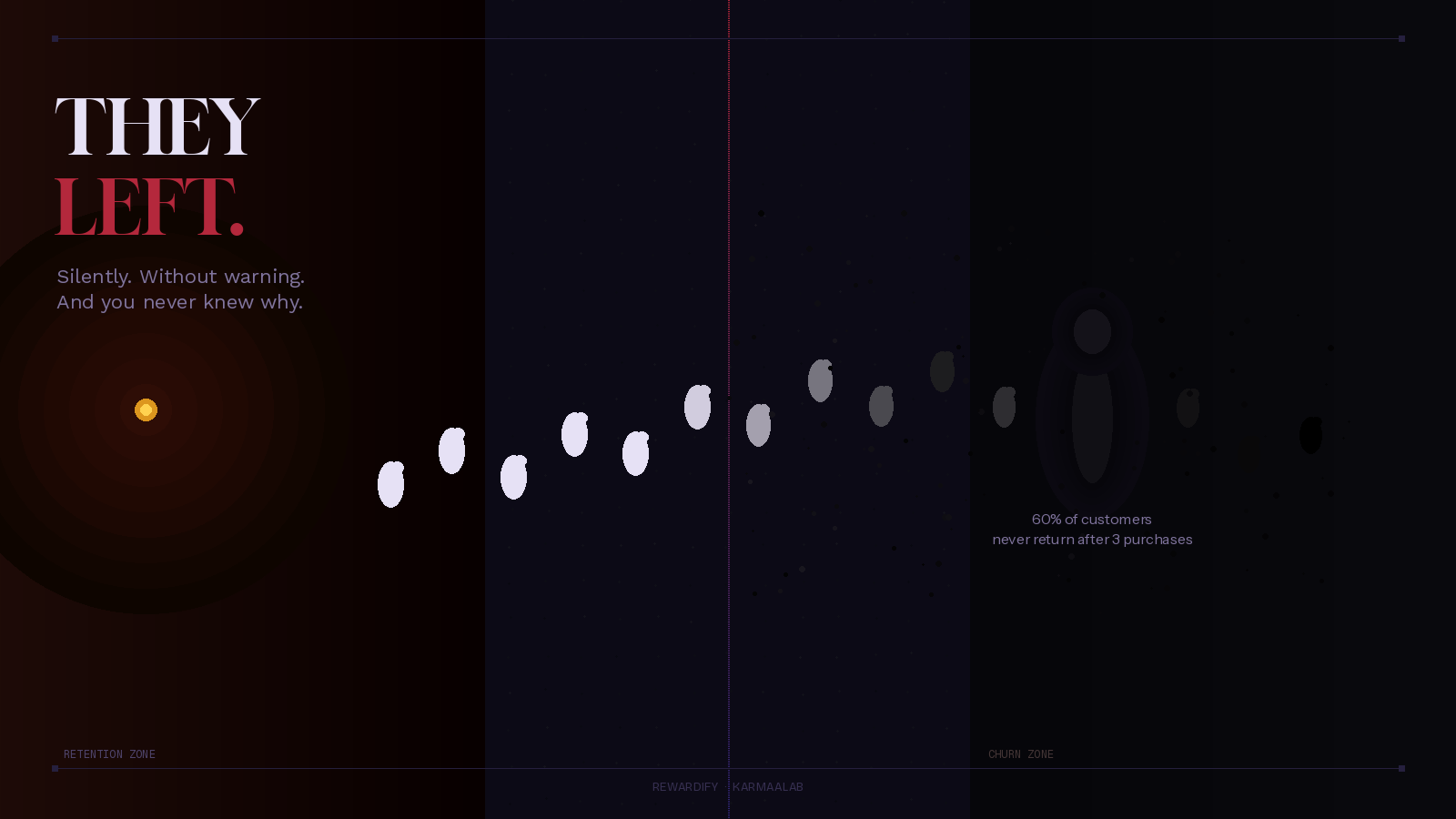
    Think about this scenario. A customer discovers your store, has a great experience, buys again a month later, then one more time after that. Three purchases. They clearly like what you offer.

    Then — nothing. They stop coming.

    What happened? Probably nothing dramatic. They just didn’t feel pulled back. No reminder. No reward. No sense that their loyalty meant anything to your business. So the next time they needed what you sell, they tried someone else. Maybe out of curiosity. Maybe because they saw an ad. And now they’re someone else’s customer.

    This isn’t a product problem. It’s a retention infrastructure problem.


    Why Traditional Loyalty Tactics Stop Working

    Most businesses that try to address this reach for the obvious solutions:

    Paper punch cards. Easy to lose. Easy to forget. Zero data. No way to know who your most loyal customers actually are.

    Manual discounts. Inconsistent. Staff-dependent. No tracking. Erodes margin without building genuine loyalty.

    WhatsApp broadcasts. Great for announcements, terrible for personalised engagement. No way to tie messages to actual purchase behaviour.

    None of these solutions create the one thing that actually drives repeat purchases: a sense of earned progress. The feeling that every time you buy, you’re getting closer to something valuable.


    What Actually Keeps Customers Coming Back

    Behavioural science has a clear answer here. Customers return when they have accumulated value they don’t want to lose.

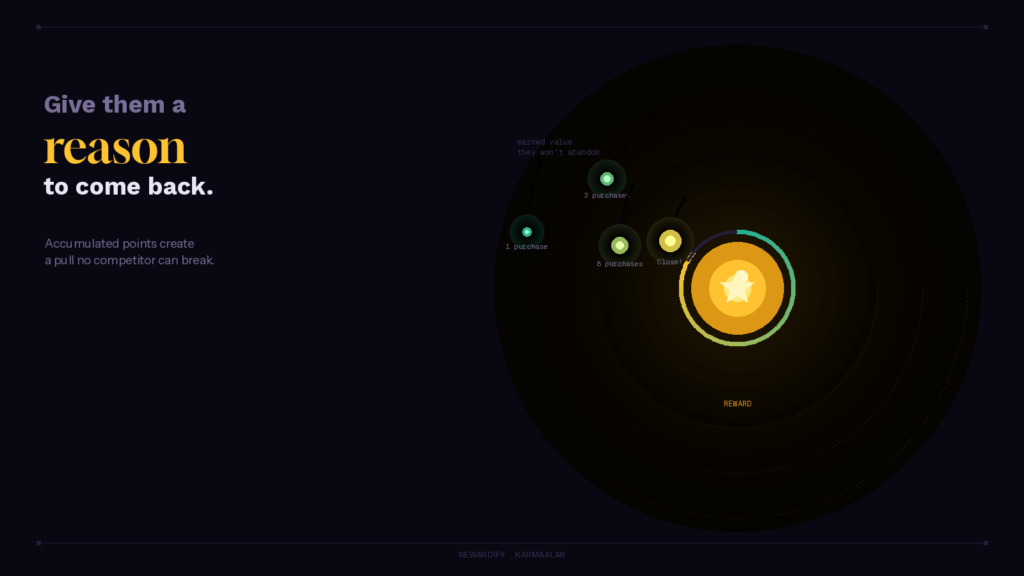
    This is why frequent flyer miles work. Why coffee shop apps work. Why gaming achievements work. Once someone has earned 300 points toward a 500-point reward, they are significantly more likely to make their next purchase with you — even if a competitor offers something comparable at a slightly lower price.

    The accumulated points represent something they’ve earned. Walking away means leaving that value on the table.

    The key is making this system frictionless, visible, and automatic. If earning points is complicated, customers won’t bother. If they can’t see their progress, the motivation disappears. If your staff has to manually credit points, errors creep in and trust erodes.


    The Businesses Getting This Right

    Across India, forward-thinking retail businesses, wellness brands, and product companies are quietly building this infrastructure — and the results speak for themselves.

    Customers who are part of a loyalty program visit more frequently. They spend more per transaction. They refer friends. They become advocates.

    The businesses that don’t have this in place are watching the same customers shop elsewhere — and never knowing why.


    What the Fix Looks Like

    A well-designed digital loyalty system does three things:

    1. Makes earning effortless. Customers scan a product or make a purchase, and points are credited automatically. No cards. No manual entry. No friction.

    2. Makes progress visible. Customers can check their balance anytime, see how close they are to the next reward, and feel the pull of progress. This is what creates the habit.

    3. Gives you data. Which customers are most loyal? Which products drive repeat purchases? Which rewards are most popular? You stop guessing and start knowing.

    This is exactly what Rewardify by Karmaalab is built to do. Customers scan product barcodes through the Rewardify mobile app, earn points automatically, level up through reward tiers, and redeem exclusive prizes — all without any manual work from your team.

    And on your side? You get a real-time analytics dashboard showing you exactly how your loyalty program is performing — who’s engaged, what’s working, and where you can improve.


    The Cost of Waiting

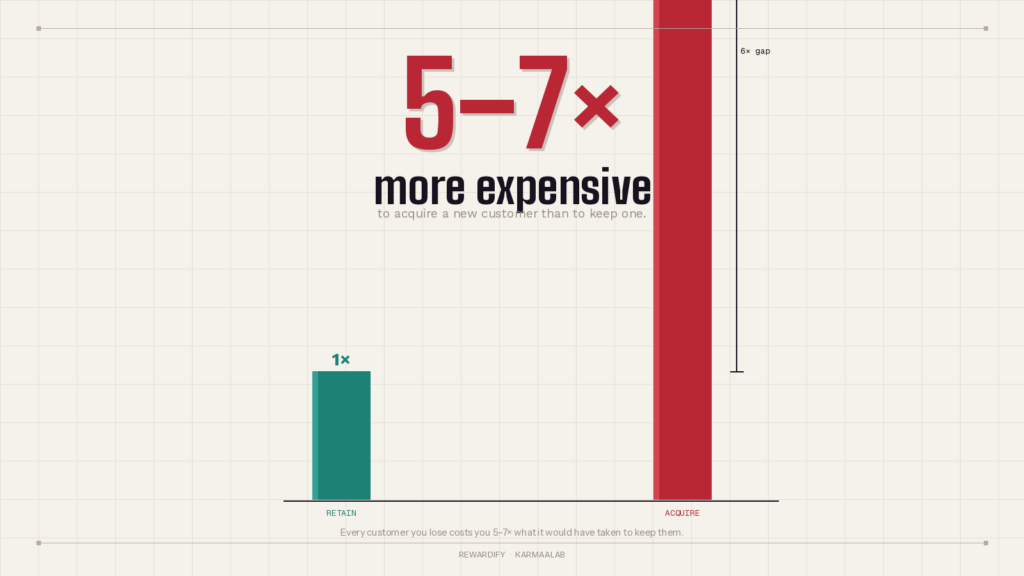
    Every month you run your business without a structured loyalty program is a month of retention data you’ll never get back. More importantly, it’s a month of customers who bought once, had a perfectly fine experience, and then drifted away because nothing kept them close.

    The businesses pulling ahead in competitive markets aren’t necessarily offering better products. They’re offering better reasons to return.

    If you’re ready to stop losing loyal customers silently, Rewardify is built for exactly this.


    Rewardify is a product of Karmaalab — a Bengaluru-based technology company building AI-powered solutions for businesses across India.

  • HR Analytics: From Data to Better Hiring Decisions

    HR Analytics: From Data to Better Hiring Decisions

    HR decisions without data are assumptions.

    Analytics platforms enable:

    • Hiring funnel optimization
    • Performance tracking
    • Workforce forecasting

    Organizations that ignore HR data operate blindly.

  • Interview Processes Are Broken — Here’s the Fix

    Interview Processes Are Broken — Here’s the Fix

    Unstructured interviews lead to inconsistent hiring decisions and bias.

    A strong interview process includes:

    • Defined evaluation criteria
    • Structured question sets
    • Standardized scoring

    Without structure, hiring becomes guesswork.

  • Startup Hiring: Why Speed Beats Perfection

    Startup Hiring: Why Speed Beats Perfection

    Startups fail when hiring slows down. Perfect candidates don’t exist—delays cost more than imperfect hires.

    The focus should be:

    • Faster decision cycles
    • Clear hiring criteria
    • Iterative improvement

    Speed is a competitive advantage, not a compromise.

  • AI Interviews: The Fastest Way to Reduce Time-to-Hire

    AI Interviews: The Fastest Way to Reduce Time-to-Hire

    Recruiters waste time scheduling and screening candidates manually. AI interviews eliminate that bottleneck.

    Candidates can be evaluated instantly, using structured assessments and standardized scoring.

    Companies using AI hiring pipelines consistently outperform those relying on traditional interviews.

  • HRIS for FMCG: Fixing Compliance at Scale

    HRIS for FMCG: Fixing Compliance at Scale

    FMCG companies operate with massive employee volumes, making compliance a moving target. Manual tracking leads to errors, penalties, and audit failures.

    An HRIS system centralizes compliance workflows, automates statutory updates, and provides real-time visibility into workforce data.

    Without automation, compliance is reactive. With HRIS, it becomes controlled and predictable.

  • HR Analytics: Turning Data into Hiring Decisions

    HR Analytics: Turning Data into Hiring Decisions

    HR without data is guesswork.

    HR analytics platforms provide:

    • Time-to-hire insights
    • Candidate drop-off analysis
    • Performance correlation

    Leadership that ignores HR data is making blind decisions.